


Remember when marketing automation meant just scheduling emails? Those days feel like ancient history. Today, it’s a dynamic force, constantly evolving and reshaping how businesses connect with customers and drive growth. We’re talking about sophisticated systems that learn, adapt, and personalize experiences far beyond simple drip campaigns.
This evolution isn’t just about efficiency; it’s about deeper insights, richer customer relationships, and quantifiable returns.
Automation now powers everything from hyper-personalized content delivery to advanced lead nurturing. It’s no longer a nice-to-have, but a strategic imperative for any business looking to stay competitive. Understanding the impact of AI on digital marketing is crucial for charting a path forward.
This compilation dives deep into the latest statistics and offers a panoramic view of where marketing automation stands today and where it’s headed.
Marketing Automation Market Size and Growth Projections
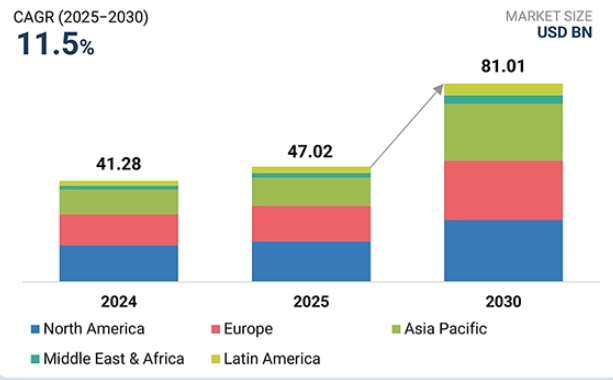
The marketing automation market is growing robustly and is expected to continue to do so in the coming years. This surge underscores its increasing importance as a core technology for businesses worldwide. Analysts forecast the market to reach tens of billions of dollars by the end of the decade.
- The global marketing automation market is expected to reach $29.24 billion by 2034 (Polaris Market Research).
- Global marketing automation industry revenue is forecast to reach $21.7 billion by 2032, an increase of over 160% (Statista).
- The marketing automation market is projected to reach $15.6 billion by 2030 at a 15.3% CAGR (Grand View Research).
- Alternative projections show the market growing from $47.02 billion in 2025 to $81.01 billion by 2030 (MarketsandMarkets).
- The marketing automation market stood at $6.8 billion in 2024 and is expected to reach $17.5 billion by 2032, a 12.5% CAGR (P&S Intelligence).
- The global marketing automation market was valued at $6.85 billion in 2024 and is expected to grow at a CAGR of 15.7% from 2025 to 2034 (Polaris Market Research).
- The global marketing automation market reached $7.8 billion in 2025 and is expected to reach $23.9 billion by 2034, a 12.76% CAGR (Research and Markets).
- The global marketing automation market was valued at $6.7 billion in 2024 (Grand View Research).
- The marketing automation market is projected to reach $81 billion by 2030, growing at ~11.5% CAGR (MarketsandMarkets).
- The global marketing automation market was valued at $7.39 billion in 2025 (The Business Research Company).
- Market size increased to $8.08 billion in 2026 (The Business Research Company).
- By 2030, the market is forecast to reach $11.06 billion (The Business Research Company).
- The industry is expected to grow at a compound annual growth rate of 8.2% between 2026 and 2030 (The Business Research Company).
- The global marketing automation software market size was valued at $7.23 billion in 2025 (Fortune Business Insights).
- The global marketing automation software market is projected to grow from $8.14 billion in 2026 (Fortune Business Insights).
- The global marketing automation software market is projected to grow to $20.12 billion by 2034 (Fortune Business Insights).
- The global marketing automation software market is exhibiting a CAGR of 12% during the forecast period (Fortune Business Insights).
- The marketing automation market size was valued at $47.3 billion in 2025 (Research Nester).
- The marketing automation market is projected to reach $144.3 billion by the end of 2035 (Research Nester).
- The marketing automation market is rising at a CAGR of 11.8% during the forecast period 2026–2035 (Research Nester).
- In 2026, the industry size of marketing automation is assessed at $52.8 billion (Research Nester).
- The marketing automation software market was projected to generate over $5.9 billion in revenue in 2024 (Statista).
- Global marketing automation software revenue is projected to more than double to over $11.2 billion by 2031 (Statista).
Marketing Automation Adoption and Usage Trends
Marketing automation has moved from an emerging technology to a mainstream business practice. This widespread adoption reflects a clear understanding of its value across different business sizes and sectors. It also suggests that it’s becoming a foundational element of marketing strategies.
- 76% of companies reported using marketing automation in 2021, and 26% of those who did not plan to adopt it that year (HubSpot)
- In 2021, 96% of marketers used a marketing automation platform for their businesses (Demand Spring via Fortune Business Insights).
- More than half of B2B companies (58%) plan to adopt marketing automation (Emailmonday).
- 64% of marketers already use AI tools, and 62% find AI important to their marketing (HubSpot State of Marketing 2024 via Jasper)
- 75% of the companies surveyed consider marketing automation relevant, and the share calling it very relevant rose from 18% to 42% in just two years (Pedalix)
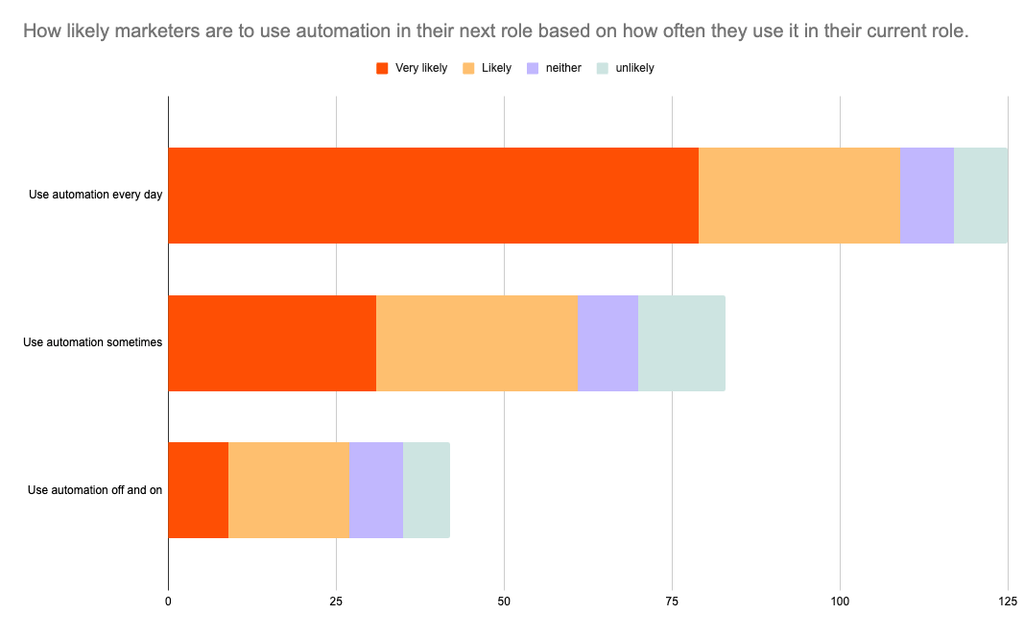
- 50% of marketers who use automation say they use it daily, 33.2% use it sometimes, and 16.8% use it on and off (Zapier)
- 27% of companies say that they still consider themselves “new” to marketing automation (Invesp)
Marketing Automation ROI and Business Benefits
Investing in marketing automation consistently delivers measurable returns, proving its worth far beyond efficiency gains. Companies frequently report substantial ROI and a direct boost to revenue and overall objectives. These statistics highlight a tangible financial advantage.
- Only 48% of companies surveyed confidently said their marketing automation investment was worth it, while 42% were not sure (VentureBeat).
- Companies see an average $5.44 return for every $1 spent on marketing automation (Nucleus Research).
- 76% of companies that use automation generate positive ROI within the first year (HubSpot)
- Companies that automate lead management see a 10% or greater increase in revenue in 6–9 months (Gartner).
- 91% of the most successful marketing automation users agree that it is very important to the overall success of their marketing across channels (Marketo and Ascend2)
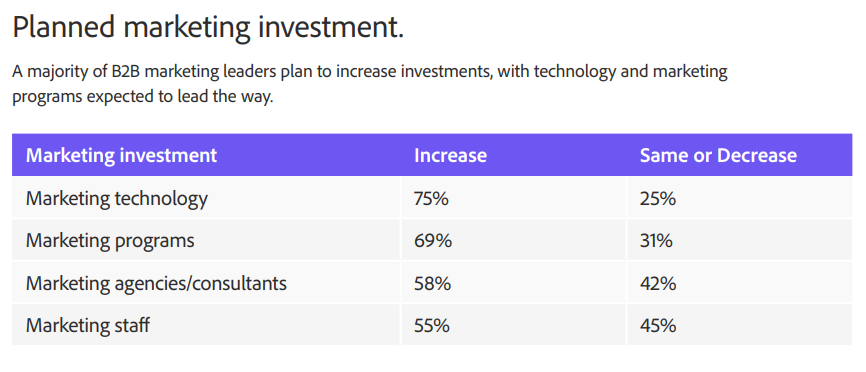
- 75% of B2B marketing leaders plan to increase their marketing technology investment over the next 12 months, more than any other marketing investment category (Adobe)
- 63% of companies are outperforming competitors with help from marketing automation (Lenskold)
- Marketing leaders who excel at automation are 27x more likely than laggards to be outperforming on marketing ROI, and 10x more likely on pipeline and revenue growth (Adobe).
Lead Generation and Conversion Impact of Marketing Automation
Marketing automation enhances lead generation and conversion rates. By automating key stages of the sales funnel, organizations can generate more qualified leads and guide them more effectively towards purchase.
- Companies using marketing automation to nurture prospects see a 451% increase in qualified leads (Annuitas Group).
- 80% of companies using marketing automation saw their number of leads increase (VentureBeat)
- 77% of companies using marketing automation saw their conversions increase (VentureBeat)
- Companies that excel at lead nurturing generate 50% more sales-ready leads at 33% lower cost (Forrester).
- Nurtured leads make 47% larger purchases than non-nurtured leads (Annuitas Group).
- B2B marketers who have deployed lead nurturing programs report an average 20% increase in sales opportunities from nurtured leads versus non-nurtured leads (Demand Gen Report).
Productivity and Cost Efficiency
Automation tools drive productivity and reduce costs in marketing operations. By streamlining repetitive tasks and optimizing resource allocation, businesses can achieve more with less. This efficiency gain frees up valuable human capital to focus on strategic initiatives.
- Organizations that redesign marketing around AI are seeing productivity gains of two to three times and savings of 10%–30% (McKinsey).
- Marketing automation drives a 12.2% reduction in marketing overhead (Nucleus Research).
- Marketing automation drives a 14.5% increase in sales productivity (Nucleus Research).
Customer Journey and Personalization
Marketing automation is central to crafting personalized, cohesive customer journeys that improve engagement and loyalty. Automating interactions across touchpoints ensures that customers receive relevant content and experiences at every stage. Meanwhile, personalization differentiates brands in a competitive landscape.
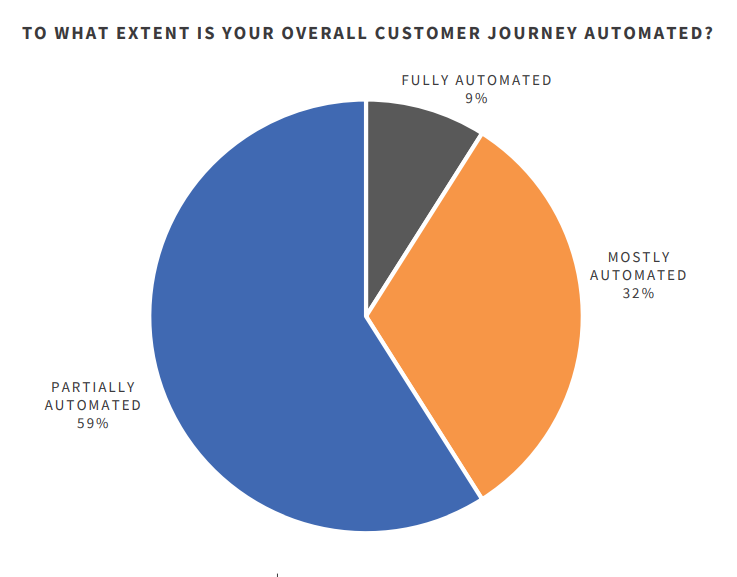
- Only 9% of marketers have fully automated their customer journey (Ascend2).
- 89% of marketers agree their marketing automation solution makes it easy to build effective customer journeys, and 30% strongly agree (Ascend2)
- 59% of marketers say their customer journeys are partially automated, while 32% report mostly automated journeys (Ascend2)
- In 2023, 79% of marketers had automated their customer journey to some extent: 10% fully, 25% mostly, and 44% partially, while 21% had not automated it at all (Ascend2).
- 41% of marketers have mostly or fully automated customer journeys (Ascend2)
- While 41% of marketers have mostly or fully automated customer journeys, the majority (59%) are still partially automated (Ascend2).
- 83% of consumers are willing to share their data to enable a personalized experience (Accenture)
- 72% of marketers who use AI and automation say it helps them personalize customer experiences (HubSpot State of Marketing 2024)
- 7 in 10 marketers using AI and automation report that it helps them improve the overall customer experience (HubSpot State of Marketing 2024)
- 74% of marketers attribute increased customer engagement to targeted personalization (Econsultancy via Influencer Marketing Hub)
- AI-powered next best experience capabilities can enhance customer satisfaction by 15%–20%, increase revenue by 5–8%, and reduce the cost to serve by 20–30% (McKinsey).
- 43% of marketers say improving the customer experience is the most important advantage gained from utilizing automation (Ascend2)
AI and Emerging Technologies in Marketing
Artificial intelligence and other cutting-edge technologies are integrating with marketing automation, unlocking new levels of personalization and efficiency. AI-powered tools enhance everything from content creation to audience targeting. This convergence signals a shift toward intelligent, adaptive marketing.
- 77% of marketers who use generative AI say it helps them create more personalized content (HubSpot)
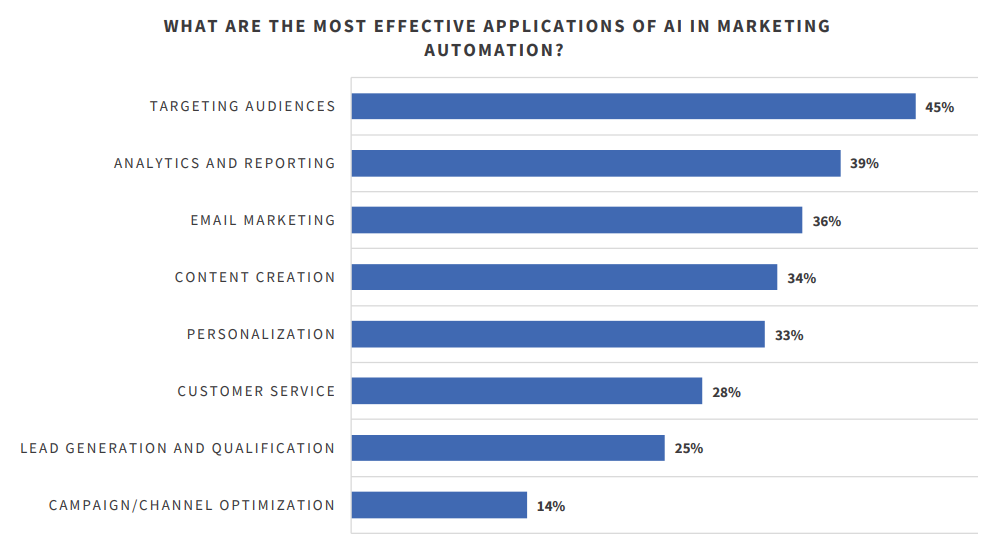
- Targeting audiences is the most effective application of AI in marketing automation, cited by 45% of marketers (Ascend2).
- 75% of marketers are using AI in some form, though only 13% have moved to agentic AI (Salesforce)
- 51% of marketers say they’re piloting or scaling the use of AI-powered automation in their work (Salesloft)
- Only 13% of marketers currently use agentic AI, but high performers are twice as likely to use AI agents as underperformers (Salesforce).
- The voice AI agents market is forecast to grow by $10.96 billion from 2024 to 2029, at a 37.2% CAGR (Technavio).
- The AI-powered marketing platform market is forecast to grow from $11.97 billion in 2026 to $28.37 billion by 2031, an 18.84% CAGR (Mordor Intelligence).
Channel-Specific Marketing Automation
Automation is not a one-size-fits-all solution; it varies significantly across marketing channels. From email to social media and paid advertising, marketers deploy channel-specific strategies to optimize performance. Understanding these channel-specific trends is key to building a holistic and effective automation strategy.
Email marketing automation
Automation amplifies email’s effectiveness and revenue-generating potential. Automated email campaigns, like welcome series and abandoned cart reminders, consistently outperform manual sends in terms of open rates, click-throughs, and conversions.
- Automated emails generate 320% more revenue than non-automated emails (Campaign Monitor).
- 63% of marketers used automation for email marketing in 2023, up from 40% in 2021 (Ascend2)
- Email marketing (63%) is the most automated area, followed by social media management (50%) and paid ads (40%), which jumped from 26% in 2022 (Ascend2).
- 36% of marketers want to create more automated emails in the next 12 months (Litmus)
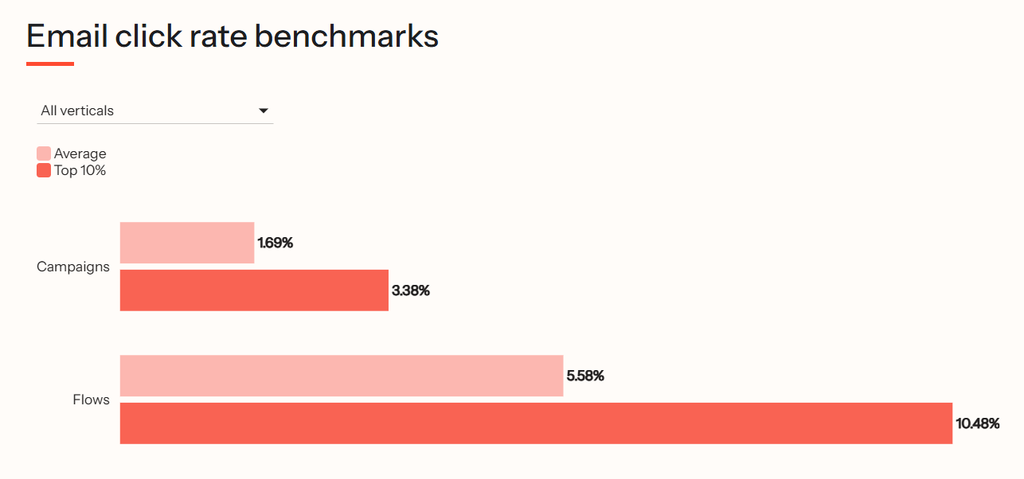
- Automated email flows average a 5.58% click rate, more than 3x the 1.69% average for campaigns, with top-10% flows reaching 10.48% (Klaviyo).
- Automated emails have 52% higher open rates and 332% higher click rates versus regular campaigns (Omnisend).
- The top 10% of email flows generate $16.96 in revenue per recipient, while the average flow generates $1.94 (Klaviyo).
- Abandoned cart flows generate the highest revenue per recipient, at $3.65 on average and $28.89 for the top 10%, followed by welcome flows ($2.65 average, $21.18 top 10%) (Klaviyo).
- One in every two people who click on an automated welcome or abandoned cart email makes a purchase (Omnisend).
- Back-in-stock emails achieve a 59.19% open rate and a 5.34% conversion rate (Omnisend).
- Abandoned cart, welcome, and browse abandonment emails make up 87% of all automated orders (Omnisend).
- Automated emails drove 37% of email sales in 2024 from just 2% of email volume (Omnisend).
- Onboarding or post-purchase emails are the most commonly automated emails (55%), followed by subscriber re-engagement (32%) (Litmus).
- Email flows generate nearly 41% of total email revenue from just 5.3% of sends, with average revenue per recipient nearly 18x higher than campaigns (Klaviyo).
- Welcome emails achieve an average open rate of 83.63% and a click-through rate of 16.60%, making them one of the highest-performing automated emails (GetResponse).
- B2C businesses that use automated workflows to resolve cart abandonment see a 50% increase in conversion rate (Moosend).
- Triggered email open rates were 76% higher than business-as-usual emails, and triggered click-through rates were more than double (Epsilon).
- 64.1% of small businesses use email marketing (Campaign Monitor)
- Personalized emails generate 6x higher transaction rates and revenue per email than non-personalized emails (Experian).
Social media automation
Social media automation streamlines content scheduling, posting, and engagement, letting marketers maintain a consistent, impactful presence without constant manual intervention. Automating these tasks saves time and often increases engagement. This efficiency enables brands to focus more on strategic social campaigns.
- 50% of marketers use automation for social media management (Ascend2)
- 29% of marketers plan to add automation to social media management and paid advertising in the coming year, and 28% plan to automate email marketing (Ascend2)
- Email marketing (58%) and social media management (49%) are the top areas where marketers use marketing automation (Ascend2).
- 47% of marketers plan to use AI and automation tools to handle basic customer inquiries at scale (Sprout Social)
Content, SEO, and paid ads automation
Automation tools are transforming how businesses create, distribute, and optimize content, manage SEO, and run paid advertising. From generating headlines to programmatic ad buying, these technologies enhance reach and performance. Marketers can scale their efforts and improve the effectiveness of digital campaigns.
- 35% of marketers use automation for content management (Ascend2)
- Around 40% of marketers use automation for paid ad optimization (Ascend).
- More than 80% of Google advertisers are using automated bidding (Google).
- Programmatic advertising, a form of automated ad buying, accounts for over 90% of US digital display ad spending (eMarketer).
- 47% of marketers report leveraging automation to make marketing processes more efficient (HubSpot)
CRM and marketing analytics automation
The synergy between CRM systems and marketing analytics, powered by automation, provides profound insights into customer behavior and campaign performance. Automate data management and reporting for more precise customer profiling and dynamic campaign control. Tight integration leads to better-informed decisions and improved outcomes.
- 98% of B2B marketing leaders rate integration between marketing automation and a customer data platform as very important, compared with 94% for CRM integration (Adobe)
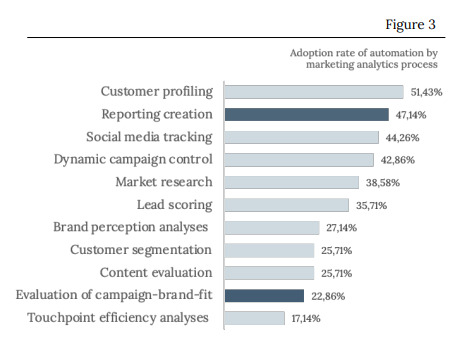
- Customer profiling is the marketing analytics process with the highest automation adoption rate (51.43%). Other processes mentioned are report creation (47.14%), social media tracking (44.26%), dynamic campaign control (42.86%), and market research (38.58%) (University of Hamburg).
- 42% of surveyed companies rank data management first among the marketing areas that benefit most from automation (University of Hamburg)
Other channel automation
Beyond major digital channels, automation extends to areas like SMS campaigns, chatbots, and multi-channel strategies, improving customer interaction and conversion. These applications show automation’s broad utility across the customer journey. Leverage multiple automated channels to lift sales performance.
- Among surveyed German companies, the transportation industry has the highest degree of marketing automation (65%) and the highest expected growth in automation (21%) (University of Hamburg).
Challenges and Implementation Barriers
Despite its clear benefits, implementing marketing automation comes with hurdles, from data quality issues to a lack of internal expertise. Many businesses struggle with strategy development, technology integration, and resource allocation. Address these common barriers to support successful adoption and maximize automation’s potential.
- 52% of marketers say collecting quality data is a top challenge in using automation to enhance performance (Ascend2)
- 47% of marketers say developing a comprehensive strategy is a top challenge in using automation to enhance performance (Ascend2)
- 41% of marketers cite allocating budget and resources as one of the most challenging aspects of using marketing automation (Ascend2)
- 40% cite integrating technologies and data as one of the most challenging aspects of using marketing automation (Ascend2)
- 52% of marketers say integrations are important when choosing marketing automation software; others mentioned key features (45%), scalability (35%), ease of use (33%), pricing (27%), company reputation (27%), customizability (24%), customer support (16%), and implementation time (15%) (Demand Spring)
- 86% of IT leaders agree that without proper integration, AI agents can introduce more complexity rather than value (MuleSoft)
- 82% of IT leaders cite data integration as one of the biggest challenges their organization faces when using AI (MuleSoft)
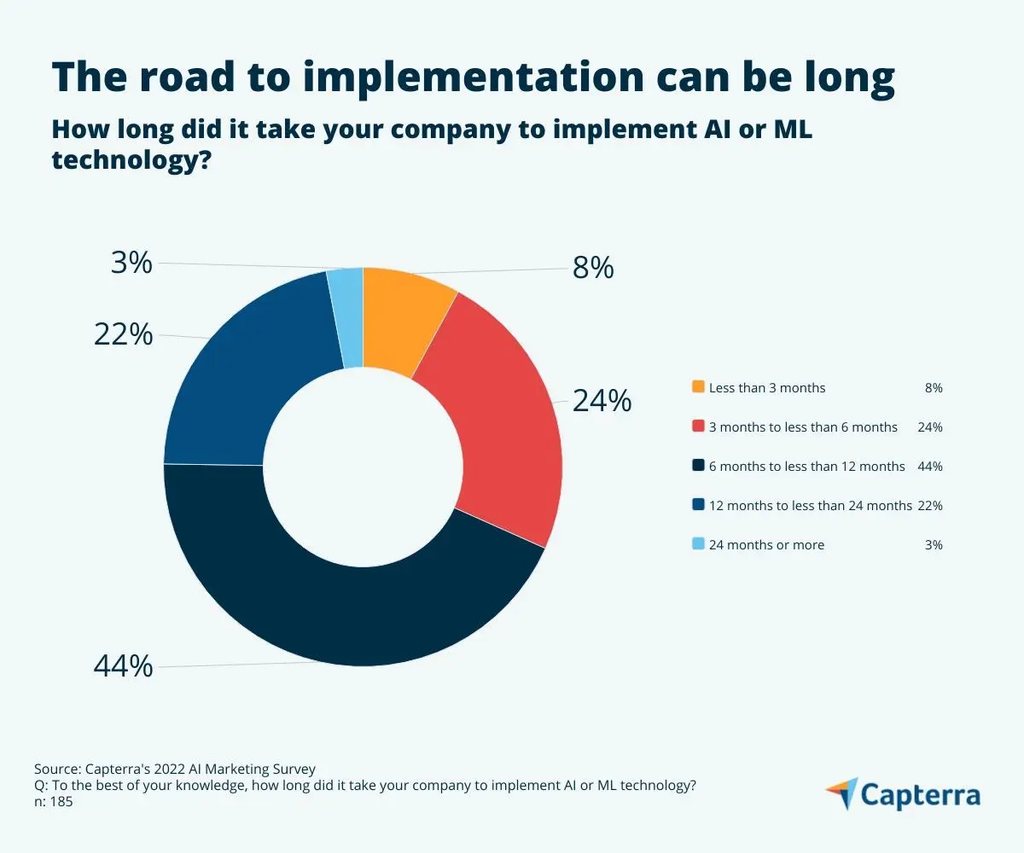
- 36% of marketers say it takes them 6 months to implement their marketing automation platform; their time is mostly spent on learning the tool (Capterra)
- Analytics (31.62%), BI and dataflows (44.12%), and communication (27.94%) departments all view deprioritization as their biggest marketing automation challenge. Content creation teams also feel the impact of deprioritization (24.60%) but list no suitable software (27.21%) as the biggest concern (University of Hamburg).
- Of 251 companies surveyed, 72% cite a lack of resources for content marketing as a medium-to-major challenge, especially for smaller companies (Pedalix).
- 86% of marketers consider “ease of use” to be the most critical factor when evaluating automation tools (Invesp)
- 19 US states have passed comprehensive privacy laws, each with its own scope, consumer rights, and business obligations (IAPP)
- Only 32% of companies understood how to measure ROI on AI projects in 2024 (Aiimi via TechRadar).
The marketing automation market is competitive, with several key players dominating different segments and regions. Cloud-based solutions and large enterprises currently hold significant influence. Understanding the market share distribution and the leading vendors provides insight into industry trends and platform capabilities.
- North America accounted for 42.38% of the marketing automation software market in 2025 (Mordor Intelligence).
- Cloud-based models held an 82.14% share of the marketing automation software market in 2025 and are projected to grow at a 13.39% CAGR through 2031 (Mordor Intelligence).
- Among the 600 B2B organizations Adobe surveyed, the most used marketing automation providers were Adobe (36%), Microsoft (24%), Salesforce (17%), HubSpot (15%), and Oracle (8%) (Adobe).
- HubSpot leads the global marketing automation market, with nearly 34.72% worldwide share (Statista).
- Oracle Marketing Cloud holds 7.31% of the global marketing automation market share (Statista).
- Welcome holds 7.24% of the global marketing automation market share (Statista).
- Adobe Experience Cloud holds 7.05% of the global marketing automation market share (Statista).
- Welcome (4.97%), ActiveCampaign (3.36%), Salesforce Pardot (2.55%), and Marketo (2.13%) round out the most used marketing automation technologies (Datanyze).
- North America dominated the marketing automation software market in 2025, with a market share of 33.60% (Fortune Business Insights).
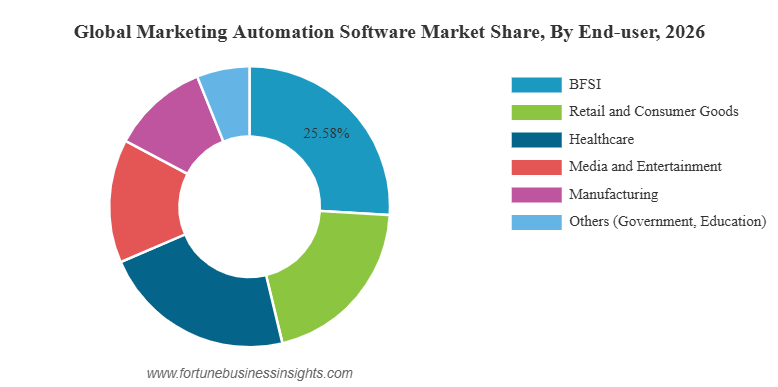
- The North America marketing automation market is expected to account for 42.3% of revenue by 2035 (Research Nester).
- North America marketing automation software market size was $2.43 billion in 2025 (Fortune Business Insights).
- The US marketing automation software market is projected to reach $1.71 billion by 2026 (Fortune Business Insights).
- The European marketing automation software market reached $1.76 billion in 2025, representing 24.30% of total market revenue, and is projected to reach $1.96 billion in 2026 (Fortune Business Insights).
- The UK marketing automation software market is expected to reach $0.41 billion by 2026 (Fortune Business Insights).
- The Germany marketing automation software market is projected to reach $0.28 billion by 2026 (Fortune Business Insights).
- North America dominated the marketing automation market, accounting for 43.6% of revenue in 2024 (Grand View Research).
- Reporting and analytics is expected to grow at the fastest CAGR of 18.4% over the forecast period (Grand View Research).
- The Asia Pacific marketing automation industry is expected to grow at the fastest CAGR of 17.8% from 2025 to 2030 (Grand View Research).
Budget and Investment
Investment in marketing automation continues to rise, reflecting its perceived value and strategic importance. A significant percentage of CMOs and marketers plan to increase their automation budgets in the coming years. This signals confidence in the technology’s ability to drive future success.
- Marketing leaders expect AI-driven automation of marketing work to more than double, from 16% in 2026 to 36% by 2028 (Gartner).
- Only 11% of marketers say their marketing automation budgets will decline in the coming year (Ascend2).
- Even as marketing spend fell through 2021, Forrester forecast marketing automation platforms would grow 3% while overall martech declined 4% (Forrester).
- 62% of CMOs plan to invest more in marketing technology in 2026, even though martech’s share of the marketing budget has fallen to a five-year low of 19.4% (Gartner)
- 21% of marketers expect their marketing automation budget to stay the same in the coming year, while 68% expect an increase (Ascend2)
- Almost 70% of marketing decision-makers surveyed in February 2024 planned to increase their marketing automation budget the following year (Statista).
- 54% of marketers report an increase in their budget for marketing automation (Ascend2)
Workforce and Operational Impact
Marketing automation impacts workforce dynamics and operational efficiency within organizations. Marketing teams often lead automation adoption, using more automation software than other departments. This shift helps employees reduce errors, feel less burnout, and focus on higher-value tasks, improving overall job satisfaction.
- 88% of organizations say they are on track toward partial or full agentic transformation, yet only 27% of their applications are connected on average (MuleSoft)
- Marketing is the largest business area using automation, with marketers using automation 76% more than sales and 139% more than finance (HubSpot).
- 30% of marketers said they want to automate tracking and data entry, 28% said lead management, and 25% mentioned managing projects or tasks (Zapier)
- 34.8% of marketers say that their confidence at work increased since they used automation, 34.4% received a raise, and 33.2% reduced errors at work; there were also some personal benefits to using automation, like feeling less burnout (48.8%), improved mood and overall happiness (37.2%), and reduced stress (34.8%) (Zapier)
- 63% of companies wholly or partly outsource marketing automation (Emailmonday)
- Only 37% of companies handle their automation needs in-house (Emailmonday).
- A mere 12% decide to leave it all to a specialist (Emailmonday).
The Future is Automated (and Intelligent)
These statistics clearly show that marketing automation isn’t just a trend; it’s the bedrock of modern marketing. It’s a dynamic, ever-expanding field that delivers substantial value. Businesses that embrace its capabilities aren’t just staying afloat; they’re shaping their future success, creating more meaningful connections, and driving tangible results.
The blend of automation and AI, in particular, is redefining what’s possible, enabling hyper-personalized experiences and unparalleled operational efficiency. It now offers deep insights and strategic advantages that were unimaginable just a few years ago. To understand how AI is redefining mobile marketing, it’s essential to explore the latest advancements.
The data make it clear: the automation market is robust, the benefits are undeniable, and the trajectory is upward. Now is the time to assess and amplify your automation strategy. Consider exploring email automation services to harness these powerful tools and propel your business forward.
Send us a message today!
Frequently Asked Questions
Key marketing automation statistics show 76% of companies use automation and report positive ROI within the first year, while 96% of marketers used a platform in 2021. The global market was valued at about $6.85 billion in 2024; automated emails generate 320% more revenue than non-automated emails, and companies average $5.44 in return for every $1 spent.
Marketing automation delivers strong returns. Companies see an average $5.44 for every $1 spent, and 76% of companies using automation generate positive ROI within the first year. Companies that automate lead management also see a 10% or greater increase in revenue within 6–9 months, according to Gartner.
Automated emails generate 320% more revenue than non-automated emails and drove 37% of email sales in 2024 from just 2% of email volume. Automated emails have 52% higher open rates and 332% higher click rates than regular campaigns, and welcome emails average an 83.63% open rate.
AI in marketing automation is most effective in audience targeting, cited by 45% of marketers, and 75% of marketers use AI in some form. Additionally, 72% of marketers using AI and automation say it helps them personalize customer experiences, and 77% say generative AI helps them create more personalized content.
Companies using marketing automation to nurture prospects see a 451% increase in qualified leads, and 80% of companies saw their leads increase after adopting automation. Nurtured leads make 47% larger purchases than non-nurtured leads, and companies excelling at lead nurturing generate 50% more sales-ready leads at 33% lower cost.
Seventy-four percent of marketers attribute increased customer engagement to targeted personalization, and 7 in 10 marketers using AI and automation report it improves the overall customer experience. According to McKinsey, AI-powered next best experience capabilities can boost customer satisfaction by 15%–20% and increase revenue by 5%–8%.
HubSpot leads the global marketing automation market with nearly 35% worldwide share, according to Statista. Of 600 B2B organizations surveyed by Adobe, the most-used providers were Adobe (36%), Microsoft (24%), Salesforce (17%), HubSpot (15%), and Oracle (8%).
The global marketing automation market is projected to grow from approximately $15.6 billion to over $81 billion by 2030, depending on the research firm. Marketing leaders expect AI-driven automation to more than double from 16% in 2026 to 36% by 2028, and 68% of marketers expect their automation budget to increase.


